
The New Kid on the Block
In recent years, DNA testing has revolutionized family history research, offering genealogists powerful new tools to uncover their roots. The advancements in genetic genealogy have allowed people to trace their ancestry with far greater accuracy than ever before.
However, DNA testing is not without controversy. Some critics argue that it amounts to mass DNA collection, benefiting corporations at the expense of consumer privacy. Others warn that DNA results can reveal unexpected family connections, leading to difficult and sometimes unwelcome discoveries. In some cases, individuals have been traced and contacted by previously unknown relatives, who use open-source data (like social media) to find them—whether they wish to be found or not.
How does it work?
Companies like AncestryDNA use autosomal DNA testing, which analyzes chromosomes inherited from both parents. This test captures segments of genetic material from multiple past generations, providing insights into ethnic origins and family connections.
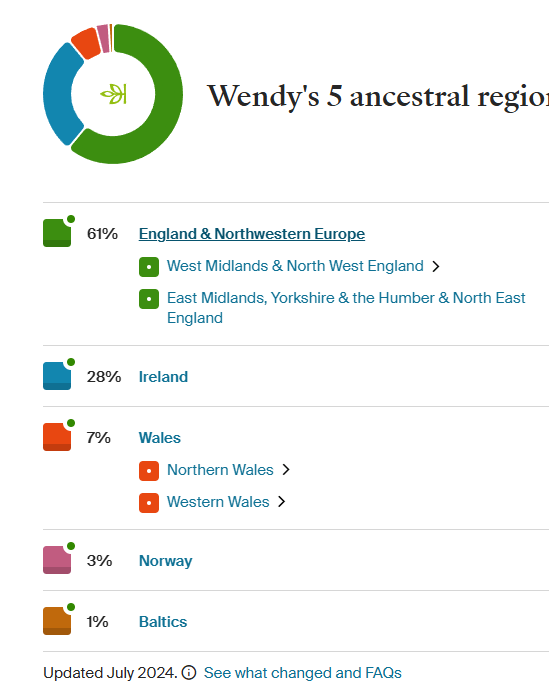
I had my own DNA tested a few years ago, and my results showed a mix of English, Irish, and a little Scottish ancestry. Interestingly, a small percentage pointed to Norway, though I haven’t yet figured out where that fits into my family’s story. My Welsh ancestry was also minimal—but even the smallest percentages can offer clues to hidden chapters in our past.
 Family